N.KOJIRA.IO
Timeline

npub1ap0dw55xedm…

npub1ap0dw55xedm5w4mkcyq8m7xyluwfc680lywrvfe50vr9ckl5m3uqtf5l75
**Astronomy Picture of the Day**

20 November 2026

**V-G-R**

Image: https://assets.science.nasa.gov/dynamicimage/assets/scien…

Credit: Apostolos Kyriazis

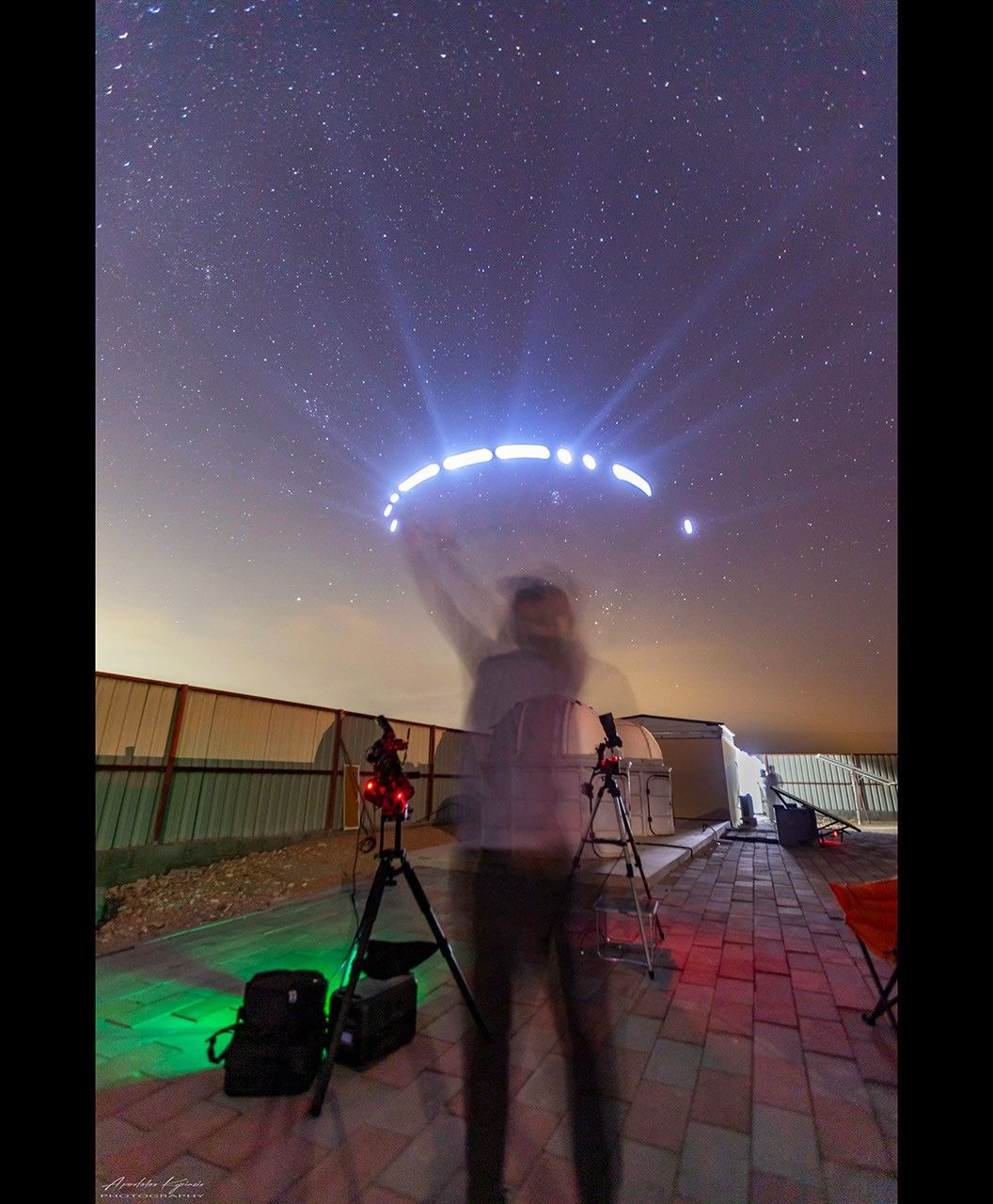
Explanation: Explanation: On November 17, fans of interstellar spaceflight around planet Earth were invited to shine a message into the night sky. Traced by a flashlight beam switched on and off, the dashes and dots of a Morse code message captured in this time exposure from the Emirates Astronomical Observatory, are read V-G-R. That's a call sign for the Voyager 1 spacecraft currently in interstellar space some 26 billion kilometers away. How long did it take the message to reach humanity's most distant interstellar spacecraft ? Traveling at the speed of light, the answer is one day . In fact, the Voyager 1 spacecraft was confirmed to reach its one light-day distance milestone on November 18, at 10:16:07 UTC, nearly 50 years after launch in 1977. For extra credit, fans of math can calculate that at one light-day per 50 years, Voyager 1 will reach its one light-year (365 light-days) distance milestone in about 18,250 years. Tomorrow's picture: pixels in space

#APOD #SpaceExploration #Voyager1 #InterstellarTravel #LightDay #MorseCodeInSpace

https://science.nasa.gov/image-article/apod-2026-november…
**Astronomy Picture of the Day**

19 November 2026

**The Horsehead and Flame Nebulas**

Image: https://assets.science.nasa.gov/dynamicimage/assets/scien…

Credit: Mark E. Killion

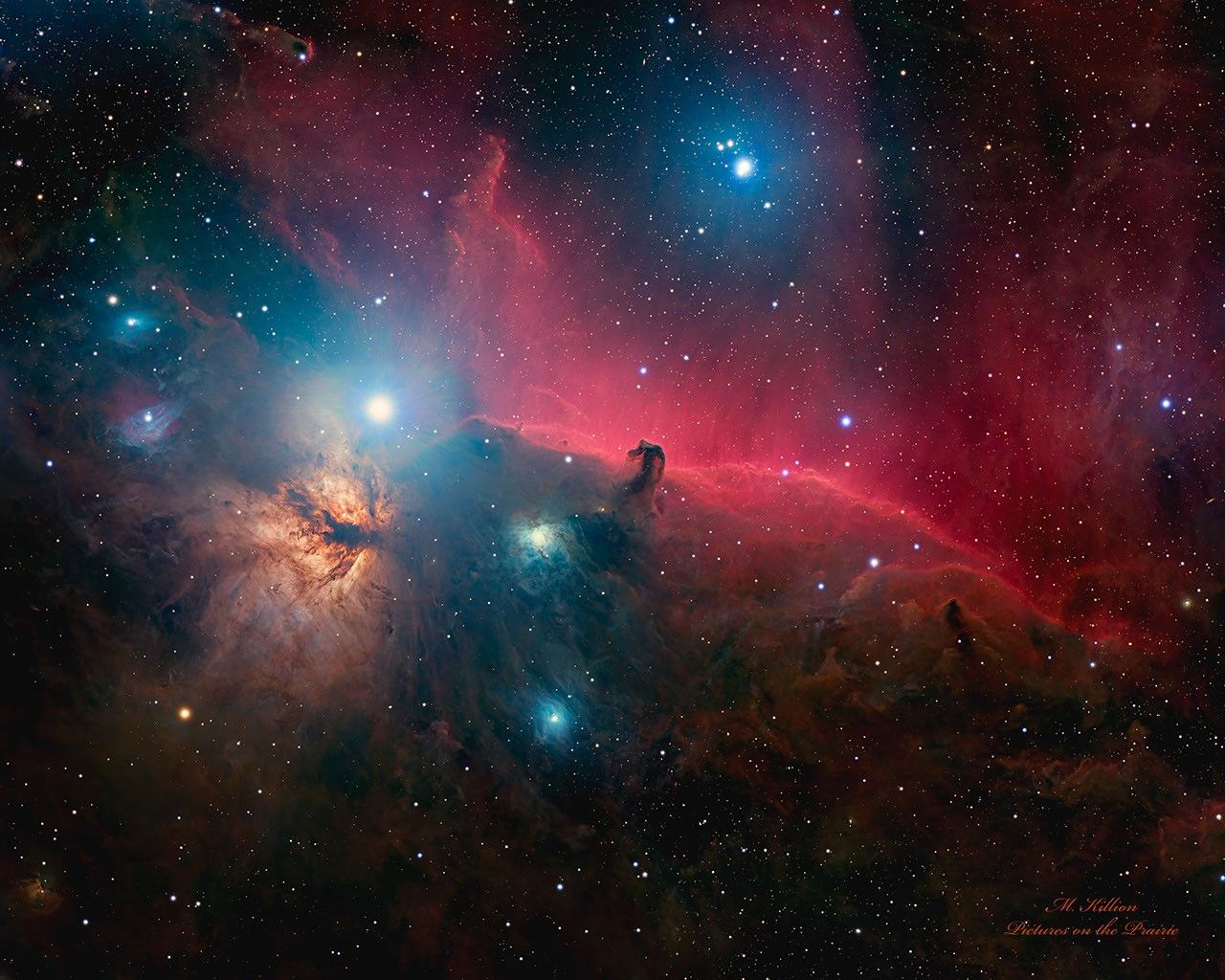
Explanation: Explanation: Today's image could have been a painting. But what do these colors mean? The brightest star, left of the center, is blue Alnitak (the Girdle): a triple star system best known for being the easternmost star in Orion's Belt . The instantly recognizable shape of a dark horse's head at the center is the aptly named Horsehead Nebula . It is about five light-years tall and lies approximately 1,500 light-years away. It is made of dust and gas that obscure the red glow behind it, which is caused by hydrogen gas being ionized by the bright star Sigma Orionis at the top. The orange nebula with dark filaments on the left is the Flame Nebula . Closer to the Horsehead, the blue reflection nebula NGC 2023 is actively forming stars. The data for this "painting" were collected for almost six hours at the Utah Desert Remote Observatories , but the equipment was remotely controlled by the astrophotographer from his home, over 2,000 km away in Illinois . Tomorrow's picture: what's next?

#APOD #HorseheadNebula #FlameNebula #Orion #Stargazing #DeepSpace

https://science.nasa.gov/image-article/apod-2026-november…
**Astronomy Picture of the Day**

18 November 2026

**A Medium-Sized Solar Flare**

Image: https://assets.science.nasa.gov/dynamicimage/assets/scien…

Credit: Mario Cogo

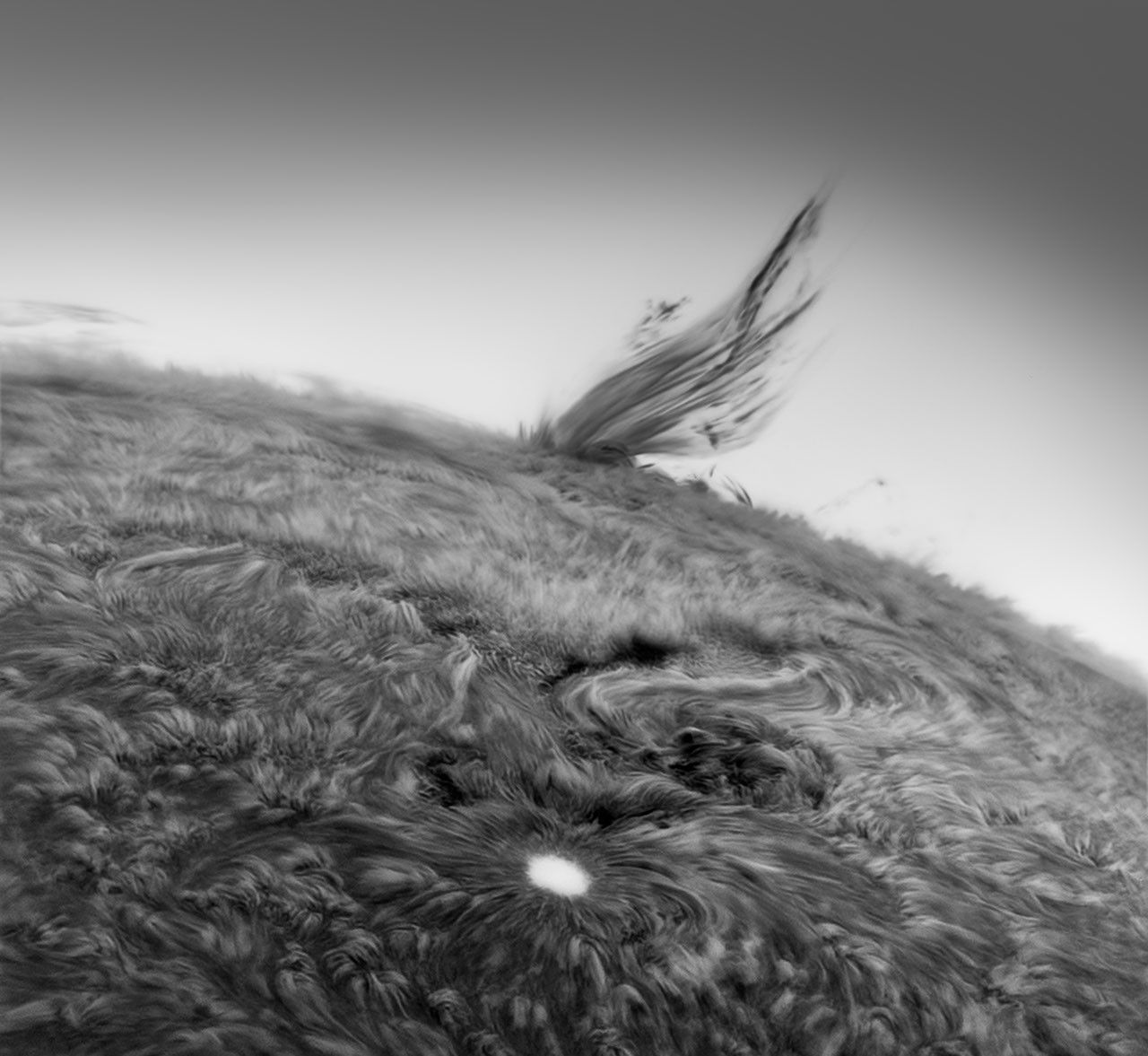
Explanation: Explanation: What a flare for the chromatic ! Today’s image captures a piece of the Sun ’s chromosphere , the layer of the Sun ’s atmosphere above its surface where the temperature rises . Why would the Sun become hotter farther away from its core ? This is potentially due to energy from the swirling magnetic fields extending up through the Sun’s atmosphere. Those same magnetic fields can twist and snap , releasing light and energetic particles as a solar flare . The H-alpha filter used for today’s image captures light from energized hydrogen atoms as they travel off the Sun’s surface during a flare on May 14, 2025. This flare was classified as an M1 based on GOES observations , meaning it was moderately bright in X-rays . M-class flares can cause radio blackouts at Earth’s poles and minor radiation storms that can harm astronauts. They aren’t even the most powerful flares ! NASA, NOAA , and other agencies monitor the Sun to predict and identify such storms so we can protect humans on Earth and in space. Tomorrow's picture: a horse of a different color

#APOD #Space #NASA #Astrogeek #Astronomy

https://science.nasa.gov/image-article/apod-2026-november…
**Astronomy Picture of the Day**

17 November 2026

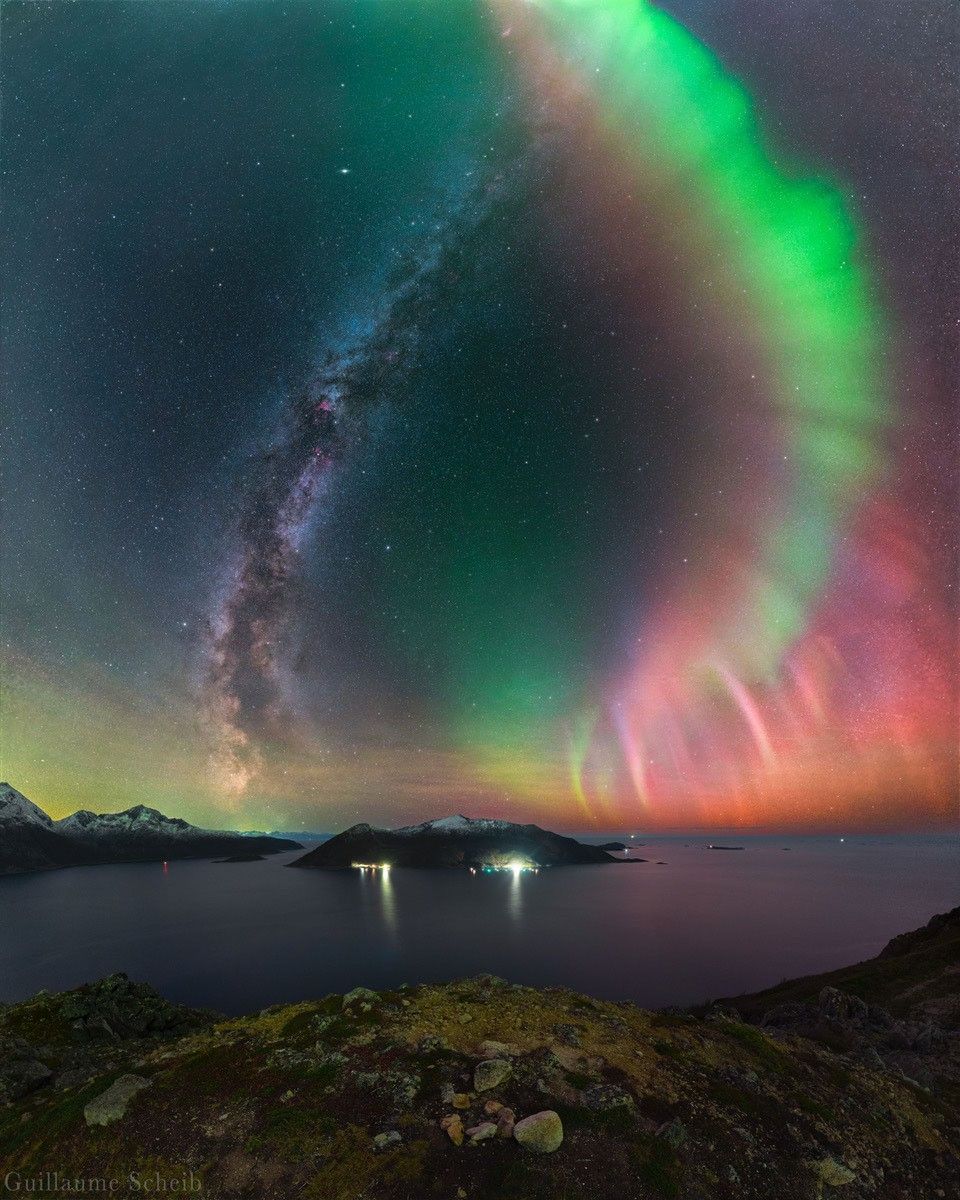
**Milky Way versus Aurora**

Image: https://assets.science.nasa.gov/dynamicimage/assets/scien…

Credit: Guillaume Scheib

Explanation: Explanation: Are these two giant arches battling for control of the sky? No, but it sure looks like it! The arch on the left is the central band of our Milky Way Galaxy , an ancient system of stars, gas, and dust that predates our Earth and is very far away. The arch on the right, by contrast, is an auroral ribbon that is only hours old, composed of energized atoms and molecules , and is close by -- right in Earth's upper atmosphere . These chance-superposed titan s have our Sun in common, a stellar member of the Milky Way that ejects energetic particles which create aurora s. Far behind the middle of the auroral arch is the Big Dipper . Even farther in the distance is the Andromeda galaxy -- the bright spot near the top of the frame, just left of center. The featured image was taken about a month ago from Kvaløya in northern Norway . Tomorrow's picture: open space

#APOD #MilkyWay #Aurora #StellarArches #GalaxyAndAurora #Astronomy

https://science.nasa.gov/image-article/apod-2026-november…
**Astronomy Picture of the Day**

16 November 2026

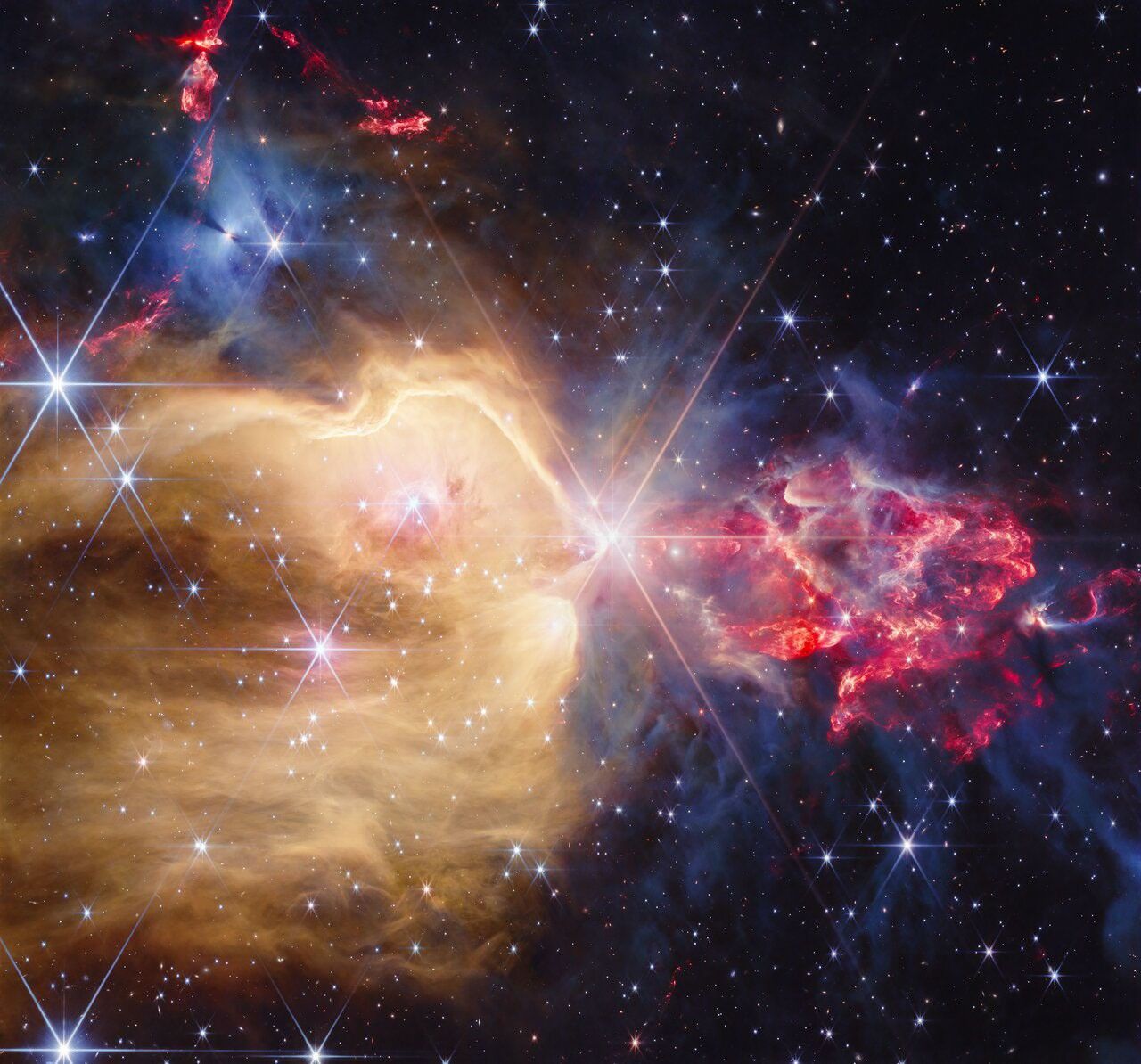
**NGC 7129: Star Formation with Jets from Webb**

Image: https://assets.science.nasa.gov/dynamicimage/assets/scien…

Credit: NASA, ESA, CSA, STScI, JWST, A. Pagan

Explanation: Explanation: How do stars form? To help answer this question, NASA used the James Webb Space Telescope to take the featured detailed image of the star-forming region NGC 7129 in infrared light . Star formation progresses when gravity pulls together massive amounts of gas, but soon things can get complicated when previously formed stars emit powerful jets and winds -- and some then explode . Opaque dust can form in the cool atmospheres of stars and, when dispersed, can obstruct visible-light images. Many stars can be seen to be forming in the featured image , with the young stars on the left, in the gold-colored gas, typically being more mature than the young stars on the right -- in the red region. Jets and wind s likely cause the filamentary nature of the red-colored gas. Studying stars at different stages of development bolsters understanding about what physical processes are most important and when. Tomorrow's picture: sky duel

#APOD #NGC7129 #StarFormation #Jets #JamesWebb #JWST

https://science.nasa.gov/image-article/apod-2026-november…
**Astronomy Picture of the Day**

15 November 2026

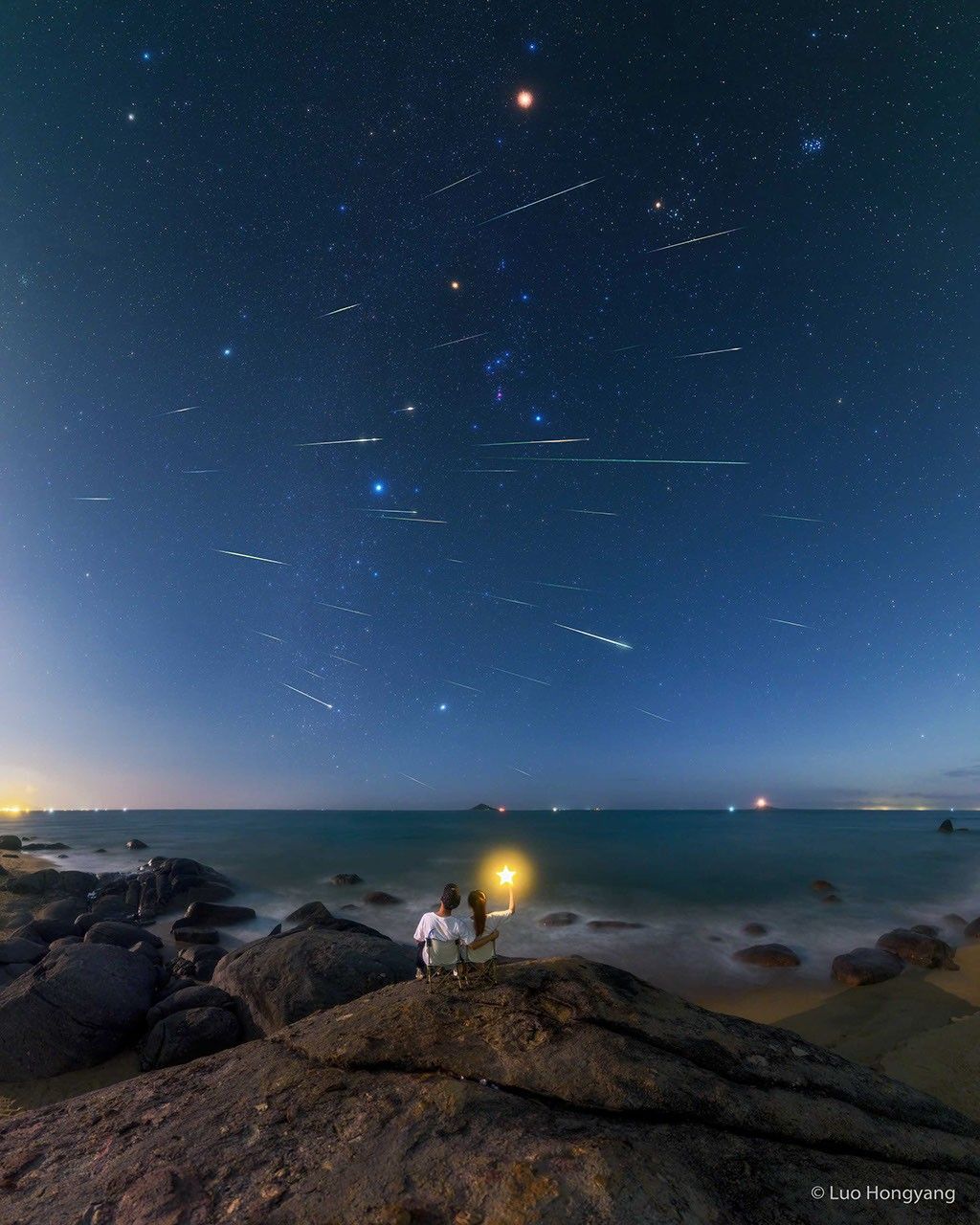
**Leonid Meteors Through Orion**

Image: https://assets.science.nasa.gov/dynamicimage/assets/scien…

Credit: Luo Hongyang

Explanation: Explanation: Where will the next meteor appear? Even during a meteor shower, it is practically impossible to know. Therefore, a good way to enjoy a meteor shower is to find a place where you can sit comfortably and monitor a great expanse of dark sky. And it may be satisfying to share this experience with a friend. The meteor shower depicted was the 2022 Leonids and the view is from Hainan , China looking out over the South China Sea . Meteor streaks captured over a few hours were isolated and added to a foreground image recorded earlier. Leonid meteor streaks trace back to the constellation of Leo and were here seen streaking across the constellation of Orion. The bright red planet Mars appears near the top of the image. The Leonids peak in mid-November every year and so will peak again this week. Bonding over their love of astronomy, the two pictured meteor enthusiasts, shown celebrating their common birthday this month, were later married. Tomorrow's picture: open space

#APOD #LeonidMeteors #Leonids #LeonidMeteorShower #OrionConstellation #Orion

https://science.nasa.gov/image-article/apod-2026-november…
**Astronomy Picture of the Day**

14 November 2026

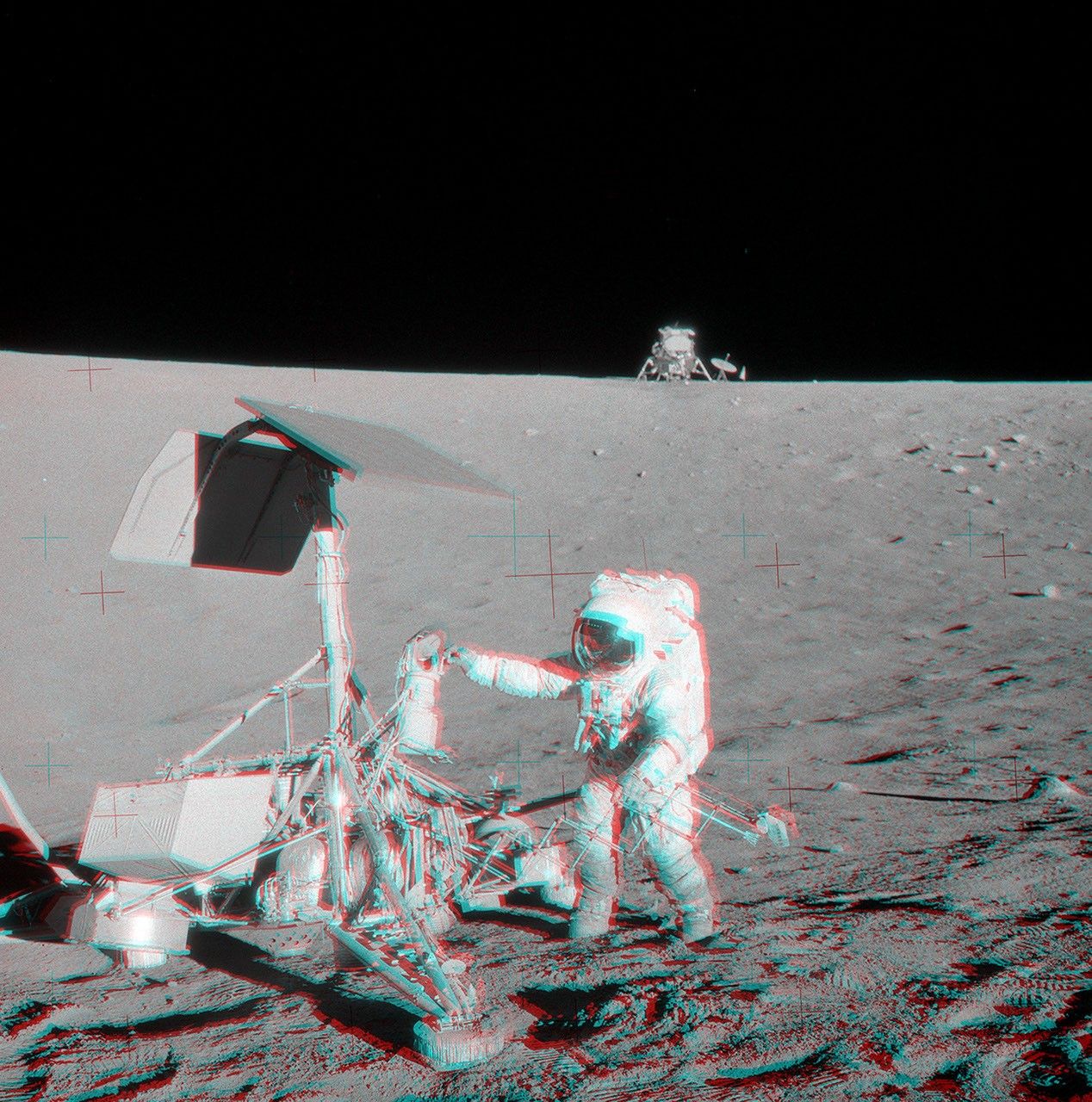
**Apollo 12 and Surveyor 3**

Image: https://assets.science.nasa.gov/dynamicimage/assets/scien…

Credit: Apollo 12, Alan Bean, Kevin Frank

Explanation: Explanation: Put on your red/blue glasses and gaze across the western Ocean of Storms on the surface of the Moon. The 3D anaglyph shows Apollo 12 astronaut Pete Conrad visiting the Surveyor 3 spacecraft in November of 1969. Surveyor 3 had landed at the site on the inside slope of a small crater about 2 1/2 years earlier in April of 1967. Visible on the horizon beyond the far crater wall, Apollo 12's Lunar Module Intrepid touched down less than 200 meters (650 feet) away, easy moonwalking distance from the robotic Surveyor spacecraft. This stereo image was carefully created from two separate pictures ( AS12-48-7133 , AS12-48-7134 ) captured on the lunar surface . They depict the scene from only slightly different viewpoints, approximating the separation between human eyes. Tomorrow's picture: meteors through Orion

#APOD #Apollo12 #Surveyor3 #LunarMission #MissionsToTheMoon #ApolloMission

https://science.nasa.gov/image-article/apod-2026-november…
**Astronomy Picture of the Day**

13 November 2026

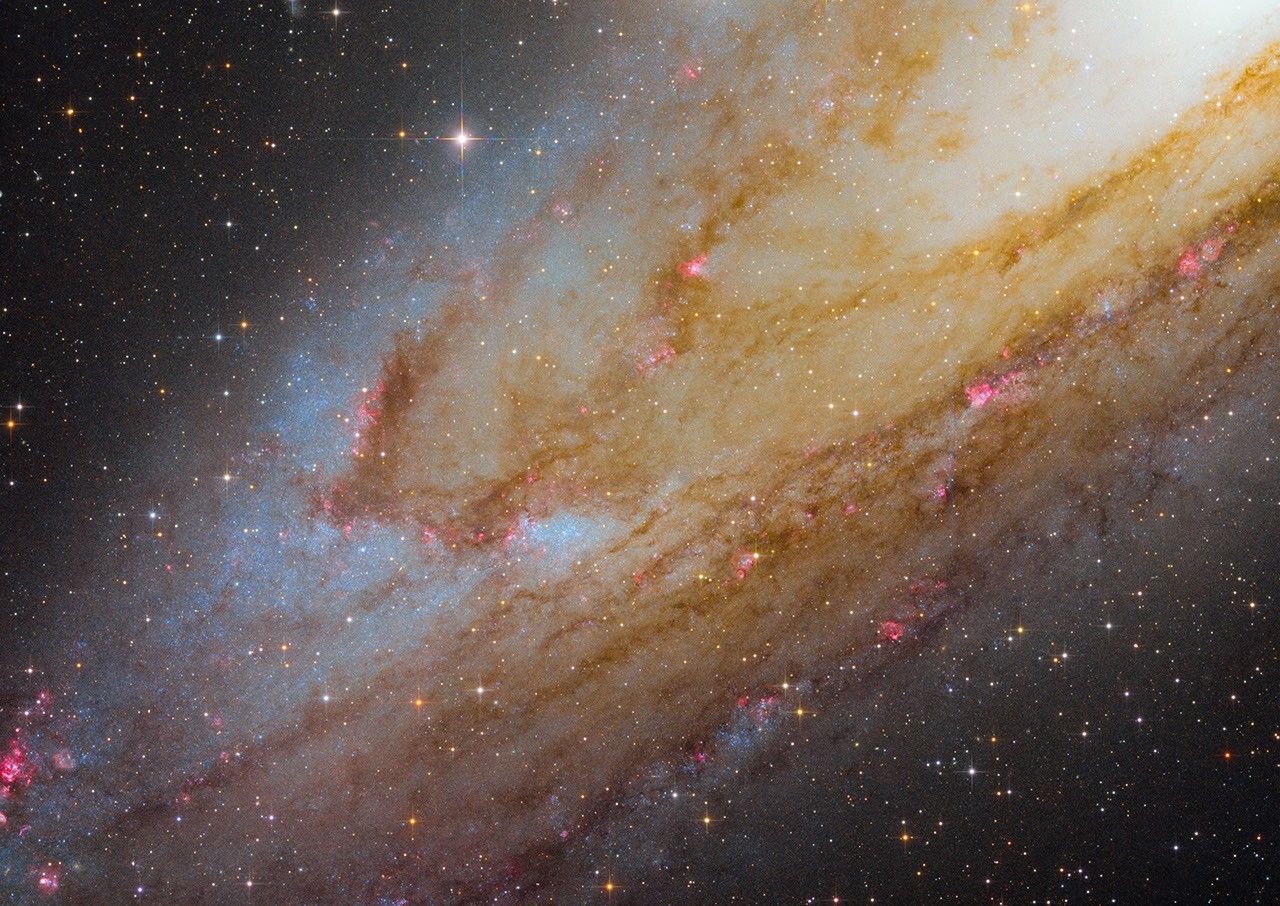
**NGC 206 and the Star Clouds of Andromeda**

Image: https://assets.science.nasa.gov/dynamicimage/assets/scien…

Credit: David Cruz

Explanation: Explanation: The large stellar association cataloged as NGC 206 is nestled within the dusty arms of the neighboring Andromeda galaxy along with the galaxy's pinkish star-forming regions. Also known as M31, the spiral galaxy is a mere 2.5 million light-years away. NGC 206 is found at the center of this sharp and detailed close-up of the southwestern extent of Andromeda's disk. The bright, blue stars of NGC 206 indicate its youth. In fact, its youngest massive stars are less than 10 million years old. Much larger than the open or galactic clusters of young stars in the disk of our Milky Way galaxy, NGC 206 spans about 4,000 light-years. That's comparable in size to the giant stellar nurseries NGC 604 in nearby spiral M33 and the Tarantula Nebula in the Large Magellanic Cloud. Tomorrow's picture: pixels in space

#APOD #NGC206 #Andromeda #M31 #StellarNursery #StarFormation

https://science.nasa.gov/image-article/apod-2026-november…
**Astronomy Picture of the Day**

12 November 2026

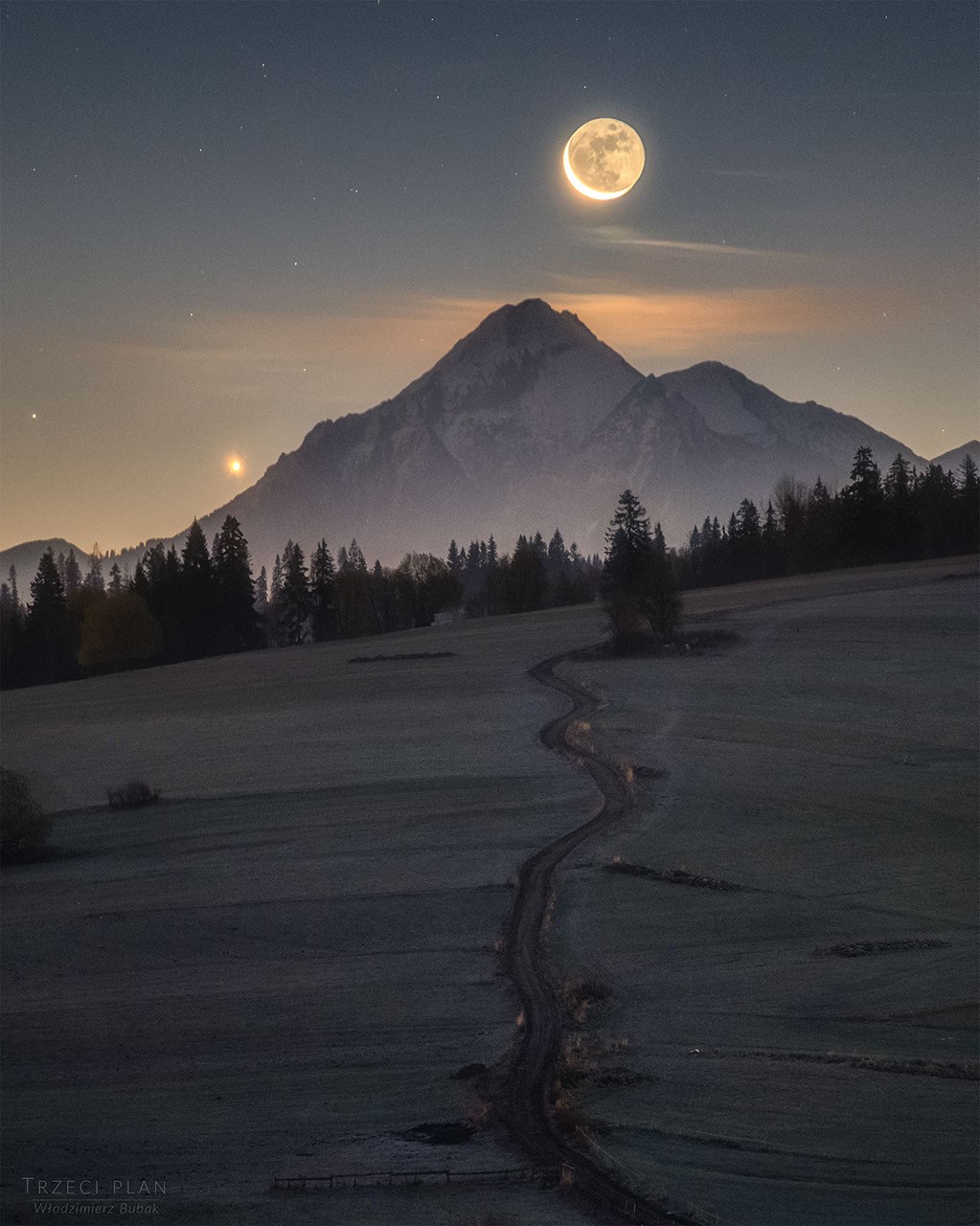
**Moon, Venus and Spica Meet**

Image: https://assets.science.nasa.gov/content/dam/science/cds/a…

Credit & CopyrightWłodzimierz Bubak

Not all those who wander are lost. A night sky example is that planets wander, and in fact the very word "planet" comes from "wandering star" in Greek. As planets shift relative to fixed stars, they may appear from our perspective to get closer to other astronomical objects. Such meetings are called conjunctions. They don't happen by chance, but follow the precise laws of celestial mechanics. This peaceful image, captured in Poland, shows the crescent Moon above the Tatra Mountains, and bright Venus close by, a little lower in the horizon. The bright star to the left of Venus is Spica in the constellation of Virgo, the Maiden. Spica is one of the brightest stars in the sky, only about 250 light-years away. It was found in 1890 that Spica is a binary star: two massive blue stars orbiting each other every 4 days. But earlier this year it was reported that Spica, the current companion of wandering Venus, is actually a triple system.

#APOD #Moon #Venus #Spica #Conjunction #NightSky

https://science.nasa.gov/image-article/apod-2026-november…
**Astronomy Picture of the Day**

10 November 2026

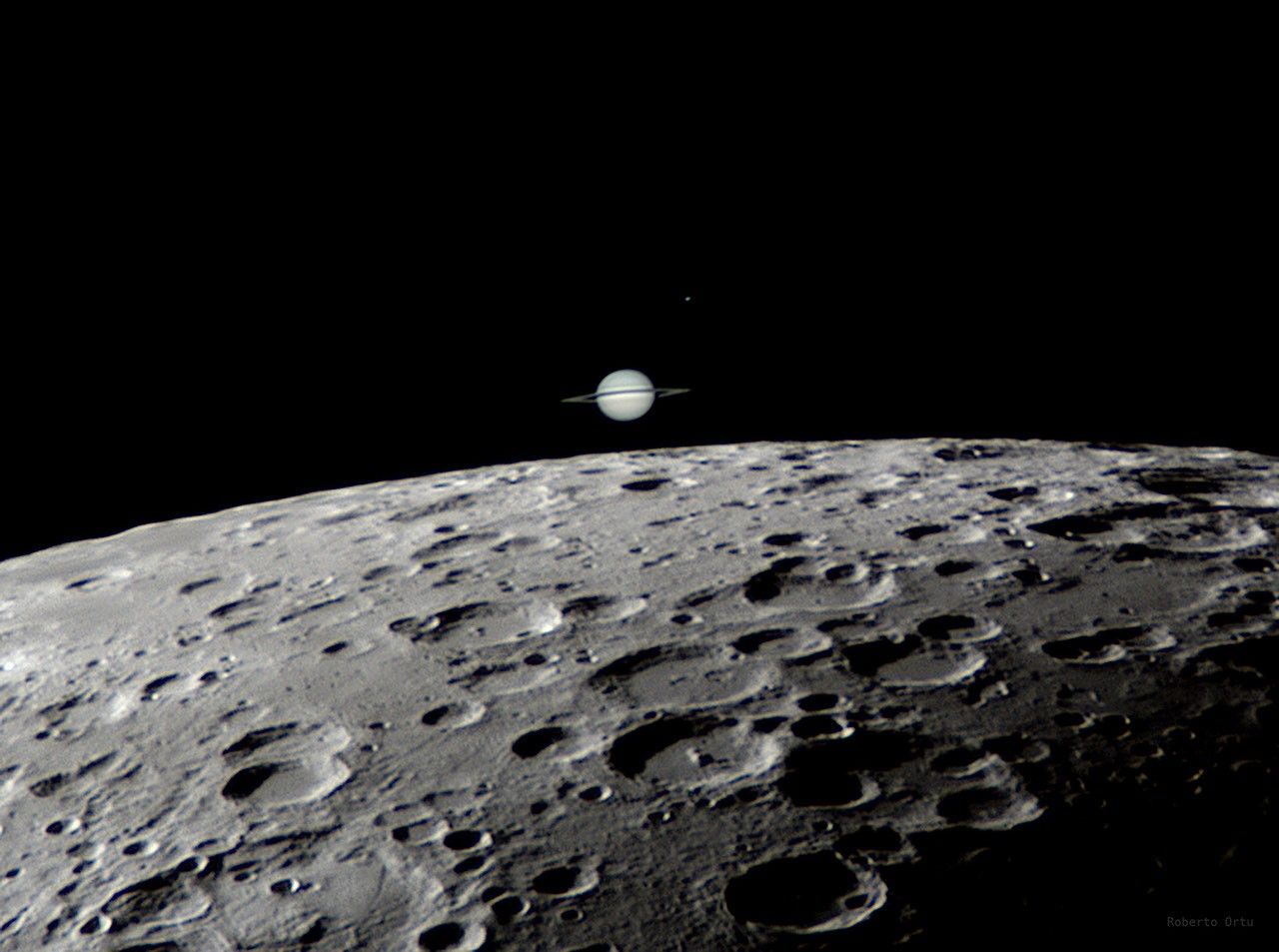
**Saturn Behind the Moon**

Image: https://assets.science.nasa.gov/dynamicimage/assets/scien…

Credit: Roberto Ortu

Explanation: Explanation: Sometimes Saturn disappears. It doesn't really go away, of course -- it just disappears from our view when Earth's Moon moves in front. Such a Saturn ian eclipse, more formally called an occultation , was visible in early 2025 along a small swath of Earth -- from Greenland through central Europe and into northern Africa . The featured image is a digital fusion of three images, the first of just Saturn before it disappeared, and then two more of the Moon with different exposure lengths. The images were taken from Sardinia , Italy , after sunset. The bright dot near Saturn is not a moon of Saturn , but rather the star 85 Aquarii , which is further behind Saturn than Saturn is behind the Moon. The next time the Moon moves in front of Saturn, as visible from some place on Earth , will be in 2031. Tomorrow's picture: small but mighty

#APOD #Saturn #MoonEclipse #Occultation #2025Astronomy #PlanetaryOccultation

https://science.nasa.gov/image-article/apod-2026-november…
**Astronomy Picture of the Day**

09 November 2026

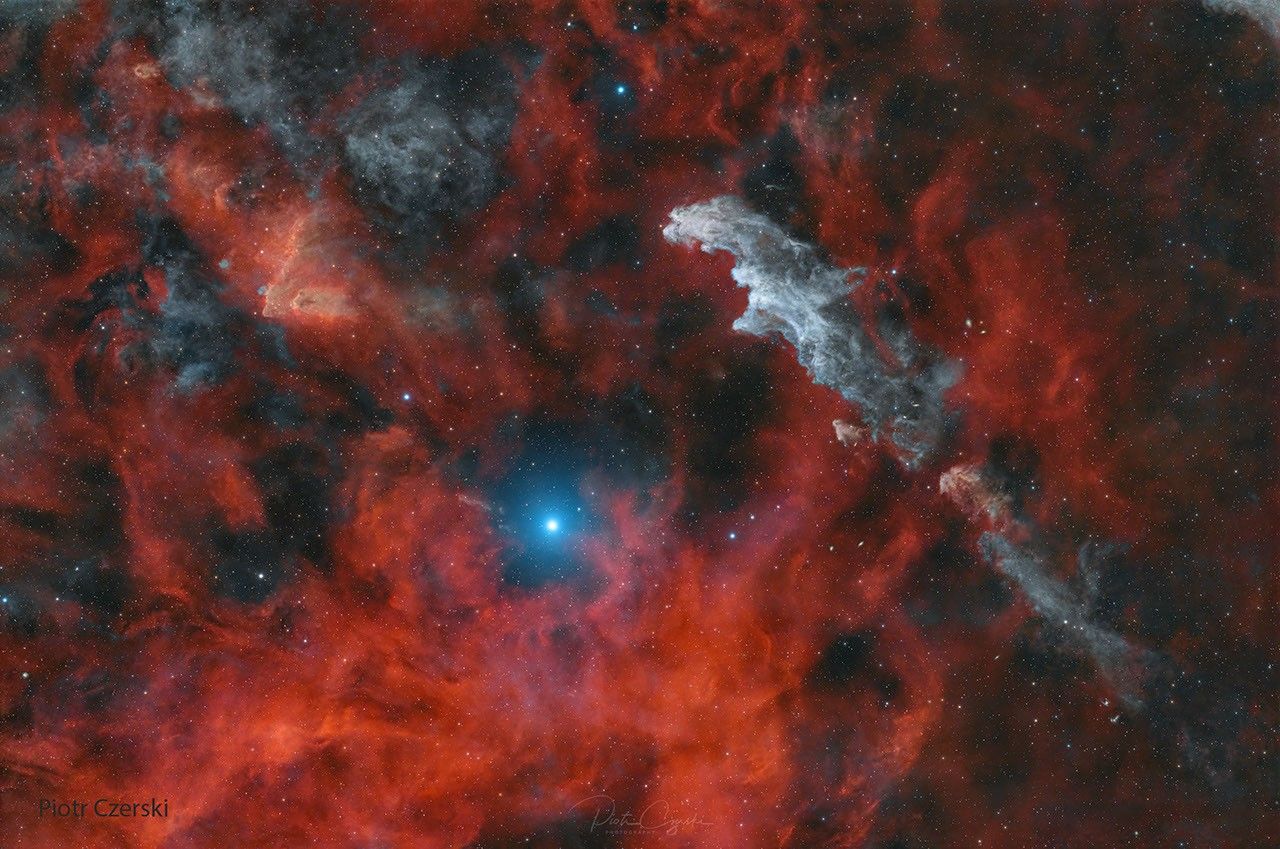
**Rigel and the Witch Head Nebula**

Image: https://assets.science.nasa.gov/dynamicimage/assets/scien…

Credit: Piotr Czerski

Explanation: Explanation: Does the blue nebula look like the head of a witch? The nebula is known popularly as the Witch Head Nebula because, it is said, the nebula's shape resembles a Halloween-style caricature of a witch's head. Exactly how, though, can be a topic of imaginative speculation . What is clear is that IC 2118 is about 50 light-years across and made of gas and dust that points to -- because it has been partly eroded by -- the nearby star Rigel . One of the brighter stars in the constellation Orion, Rigel lies just below the center of the featured image . The blue color of the Witch Head Nebula and is caused not only by Rigel's intense blue starlight but also because the dust grains scatter blue light more efficiently than red. The same physical process causes Earth's daytime sky to appear blue , although the scatterers in planet Earth's atmosphere are molecules of nitrogen and oxygen . Tomorrow's picture: suddenly Saturn

#APOD #Rigel #WitchHeadNebula #IC2118 #Orion #BlueNebula

https://science.nasa.gov/image-article/apod-2026-november…
**Astronomy Picture of the Day**

05 November 2026

**Enceladus in Silhouette**

Image: https://assets.science.nasa.gov/dynamicimage/assets/scien…

Credit: Cassini Imaging Team, SSI, JPL, ESA, NASA

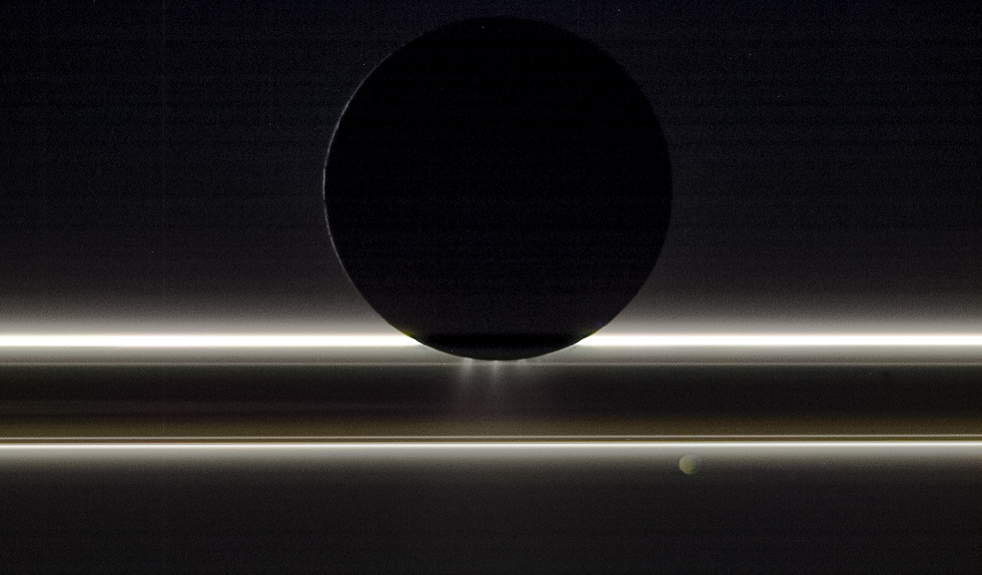
Explanation: Explanation: One of our Solar System's most tantalizing worlds, Enceladus is backlit by the Sun in this Cassini spacecraft image from November 1, 2009. The dramatic illumination reveals the plumes that continuously spew into space from the south pole of Saturn's 500 kilometer diameter moon . Discovered by Cassini in 2005, the icy plumes are likely connected to an ocean beneath the ice shell of Enceladus. They supply material directly to Saturn's outer, tenuous E ring and make the surface of Enceladus as reflective as snow. Across the scene, Saturn's icy rings scatter sunlight toward Cassini's cameras. Beyond the rings (lower right), the night side of 80 kilometer diameter moon Pandora is faintly lit by Saturnlight . Tomorrow's picture: pixels in space

#APOD #Enceladus #Cassini #Saturn #IcyMoons #Plumes

https://science.nasa.gov/image-article/apod-2026-november…